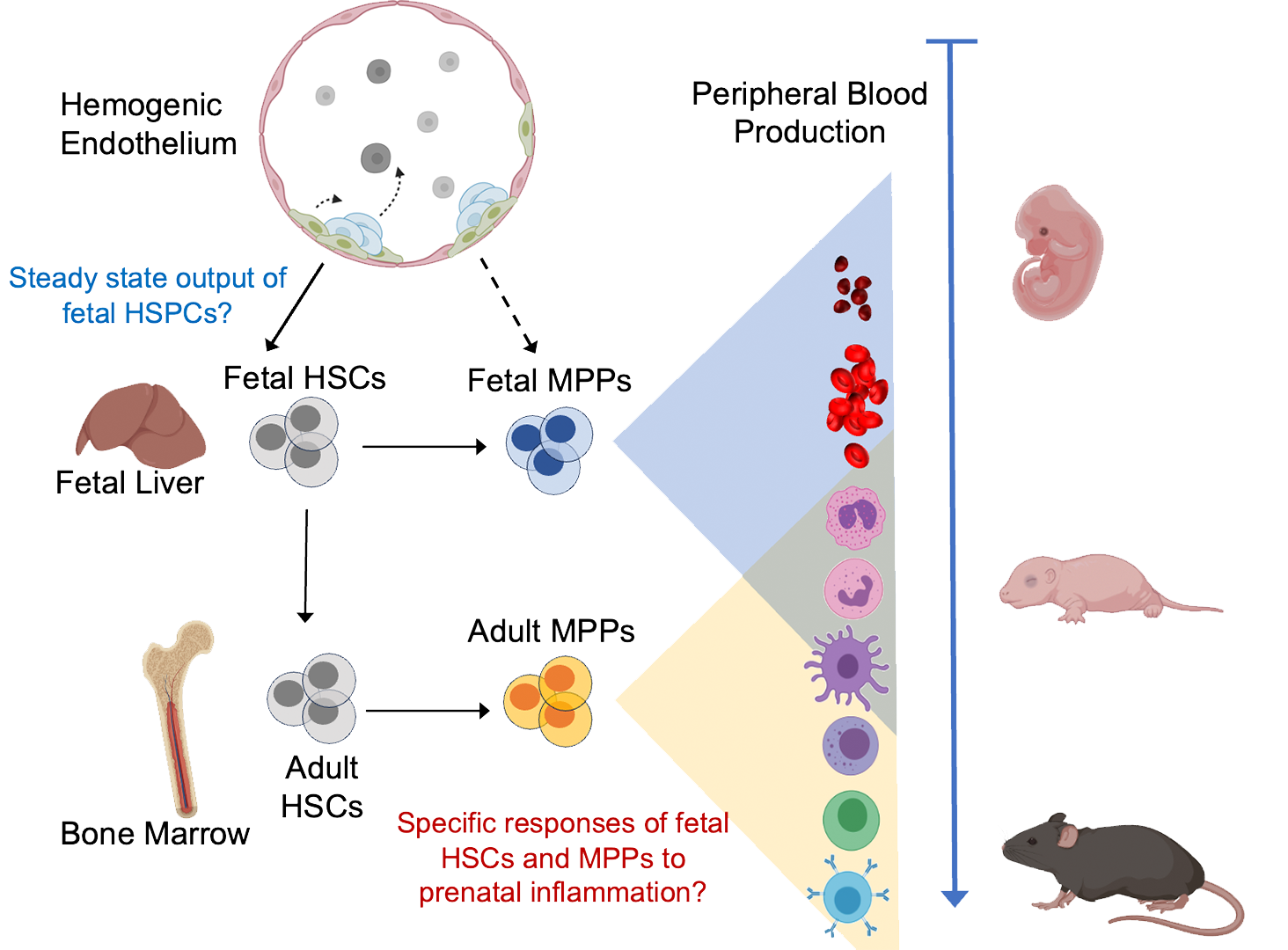
Deciphering the Output of Fetal Hematopoietic Stem and Progenitor Cells at Steady State and in Response to Prenatal Inflammation
Hematopoietic stem and progenitor cells (HSPCs)— which include hematopoietic stem cells (HSCs) and multipotent progenitors (MPPs)— give rise to all blood and immune cells across the lifespan. This project aims to investigate how specific subsets of HSCs and MPPs emerging during development contribute to hematopoiesis under steady-state conditions and in response to prenatal inflammation.
By understanding how each subset contributes to embryonic and postnatal hematopoiesis, we can better elucidate how prenatal inflammation shapes immunity and susceptibility to disease later in life. This project leverages hematopoietic fate-mapping mouse models, transplantation assays, transcriptomics, and postnatal immune challenges to study how prenatal inflammation impacts offspring immunity at the level of fetal HSPCs. Insights gained from this work will provide a deeper understanding of how developmental immune perturbations influence disease susceptibility later in life